Gallery Wall Ideas and Layouts (Plan It Before You Drill)
Affiliate disclosure: This article contains affiliate links. If you buy through them, we may earn a small commission at no extra cost to you. As an Amazon Associate I earn from qualifying purchases. Links go to Amazon search results for the product types we mention, not to specific products we have tested.
A gallery wall turns a blank wall into a personal display of art, photos and prints. It's one of the best ways to fill a large wall without buying one big, expensive piece.
With most gallery wall ideas, the hardest part is getting the layout right. Here's how to plan it so you only drill the holes you need.
Choose a gallery wall style
Grid
Identical frames hung in neat rows and columns. Clean, modern and calm. Works well above a sofa, bed or dining table. All frames need to be the same size and evenly spaced.
Salon style
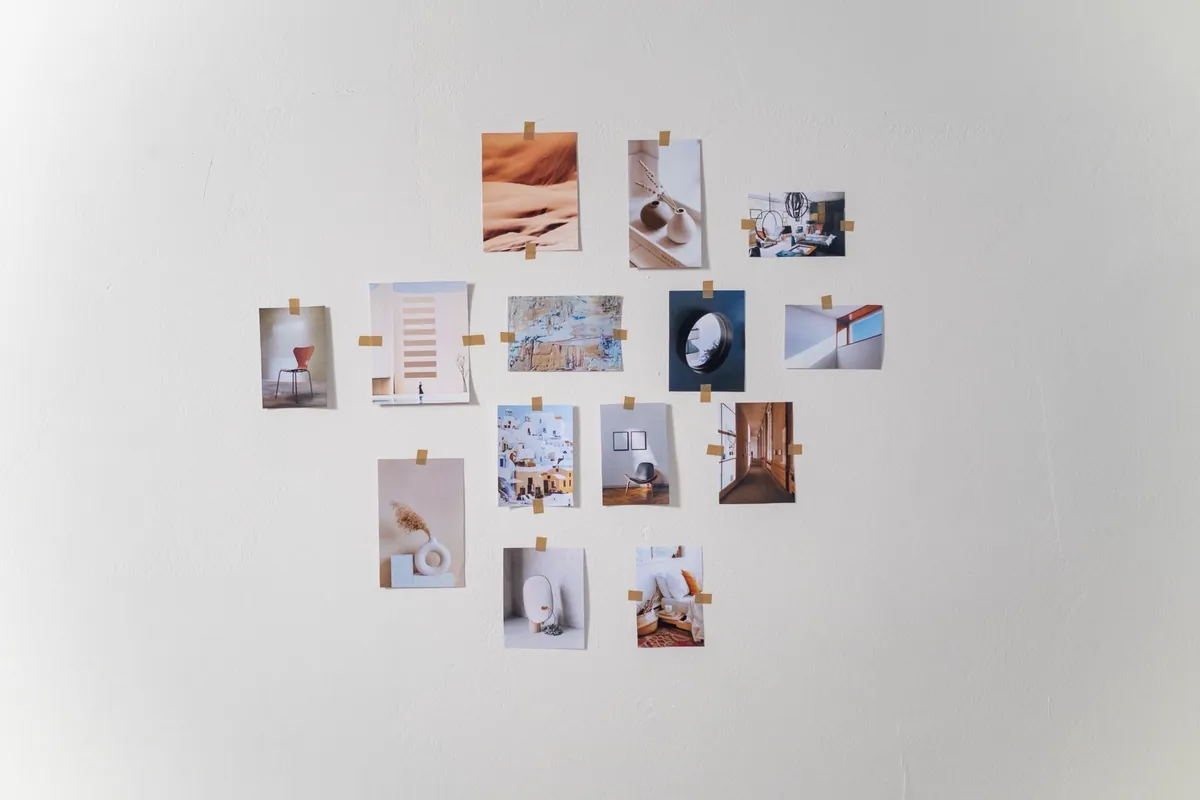
A mix of frame sizes, shapes and colors arranged in a loose cluster. Eclectic and personal. It looks collected over time.
Linear
Frames of different sizes aligned along one line, either the top edges, the bottom edges or a center line. A middle ground between grid and salon.
Picture ledge
One or two narrow shelves with frames leaned on them. Easy to rearrange and needs far fewer holes. A great option for renters.
Spacing and placement rules
These guidelines make any gallery wall look intentional:
- Gap between frames: 2 to 3 inches. Keep it consistent across the whole arrangement.
- Center height: the center of the whole group should be around 57 to 60 inches from the floor. That's roughly eye level.
- Above furniture: leave 8 to 10 inches between the top of a sofa or console and the bottom of the lowest frame.
- Width: the overall arrangement should be about two-thirds the width of the furniture below it.
Pick a theme to tie it together
Gallery walls look best with something in common. Choose one or two of these:
- Same frame color: all black, all white or all natural wood. This lets the art mix freely.
- Limited color palette: art that shares two or three colors.
- Same subject: botanicals, family photos, maps, abstract prints.
- Same mat color: white mats make mixed prints look cohesive.
The paper template method
This is the simplest way to avoid extra holes.
- Trace each frame on kraft paper or old wrapping paper. Cut out the shapes.
- Mark the hanger on each template. Measure from the top of the frame to the hook or wire pulled tight, and mark that spot.
- Lay out the frames on the floor first. Start with the largest piece just off center, then build outward.
- Tape the templates to the wall with painter's tape. Step back. Live with it for a day.
- Adjust until the spacing and balance look right. Use a level on the top row.
- Hammer the nail through the marked hanger spot on each template.
- Tear away the paper and hang the frames.
Take a photo of the floor layout before you move it to the wall.
Mixing art and objects
Gallery walls don't have to be only frames. Add variety with:
- A small round mirror
- A woven basket or wall plate
- A small wall hanging or textile
- Children's drawings in matching frames
Keep these items roughly in the same size range as the frames so nothing looks out of place.
Cheap art for gallery walls
You don't need expensive pieces. Try:
- Free public domain prints from museum collections (many offer high-resolution downloads)
- Vintage postcards and maps
- Pressed flowers or leaves
- Fabric or wallpaper samples
- Your own photos printed in black and white
For more ideas, see these DIY wall art ideas.
Where to put a gallery wall
- Above a sofa: the classic spot. Combines well with a cozy, layered living room.
- Staircases: follow the angle of the stairs, keeping the center line about 57 inches above each step.
- Hallways: a long linear arrangement works well.
- Above a bed: use lightweight frames with secure hangers. Avoid glass directly above where you sleep. Acrylic is safer.
- Above a desk: inspiration and photos.
Renter-friendly options
Use a picture ledge, which needs only a few screws, or adhesive strips rated for the frame weight. Lighter frames with acrylic instead of glass are easier to hang with strips. More tips are in this guide on how to decorate a rental apartment.
Common gallery wall mistakes
- Hanging everything too high
- Uneven gaps between frames
- Too many tiny frames, which look cluttered from a distance
- No unifying element at all
- Starting from one edge instead of the center
Styling the wall with the room
A gallery wall works best when the rest of the room is calm. Keep nearby shelves simple. These tips on how to style shelves help balance a busy wall with open storage.
Frequently asked questions
How far apart should frames be on a gallery wall?
About 2 to 3 inches. In very large arrangements, up to 4 inches can work. Consistency matters more than the exact number.
How high should a gallery wall be?
Center the whole arrangement around 57 to 60 inches from the floor, unless it's above furniture. Then leave 8 to 10 inches above the furniture.
Should all frames match?
No, but matching frames make a mixed set of art look more unified. Mixing frames works if you repeat at least one color or material.
How many frames do I need?
Most gallery walls use between 5 and 12 frames. Start with an odd number for salon style and an even number for grids.
Read next: 12 Easy DIY Wall Art Ideas for Blank Walls (On a Budget) →