How to Style Shelves Without Looking Cluttered
Affiliate disclosure: This article contains affiliate links. If you buy through them, we may earn a small commission at no extra cost to you. As an Amazon Associate I earn from qualifying purchases. Links go to Amazon search results for the product types we mention, not to specific products we have tested.
Open shelves can look beautiful, or they can look like a storage closet with no doors. Styled well, a bookcase becomes a focal point that shows your personality.
Learning how to style shelves is simpler than it looks. Here's a step-by-step method that works for bookcases, floating shelves and kitchen open shelving.
Step 1: Empty everything
Take every item off the shelves. Yes, all of it. It's much easier to style from a blank slate than to rearrange around clutter.
Wipe the shelves down while they're empty.
Step 2: Sort what you have
Make piles:
- Books
- Decorative objects (vases, bowls, sculptures, candles)
- Plants
- Art and frames
- Baskets and boxes
- Things that need to go elsewhere
Be honest about the last pile. Shelves aren't a good place for paperwork, chargers or anything you don't want to look at every day.
Step 3: Start with the big pieces
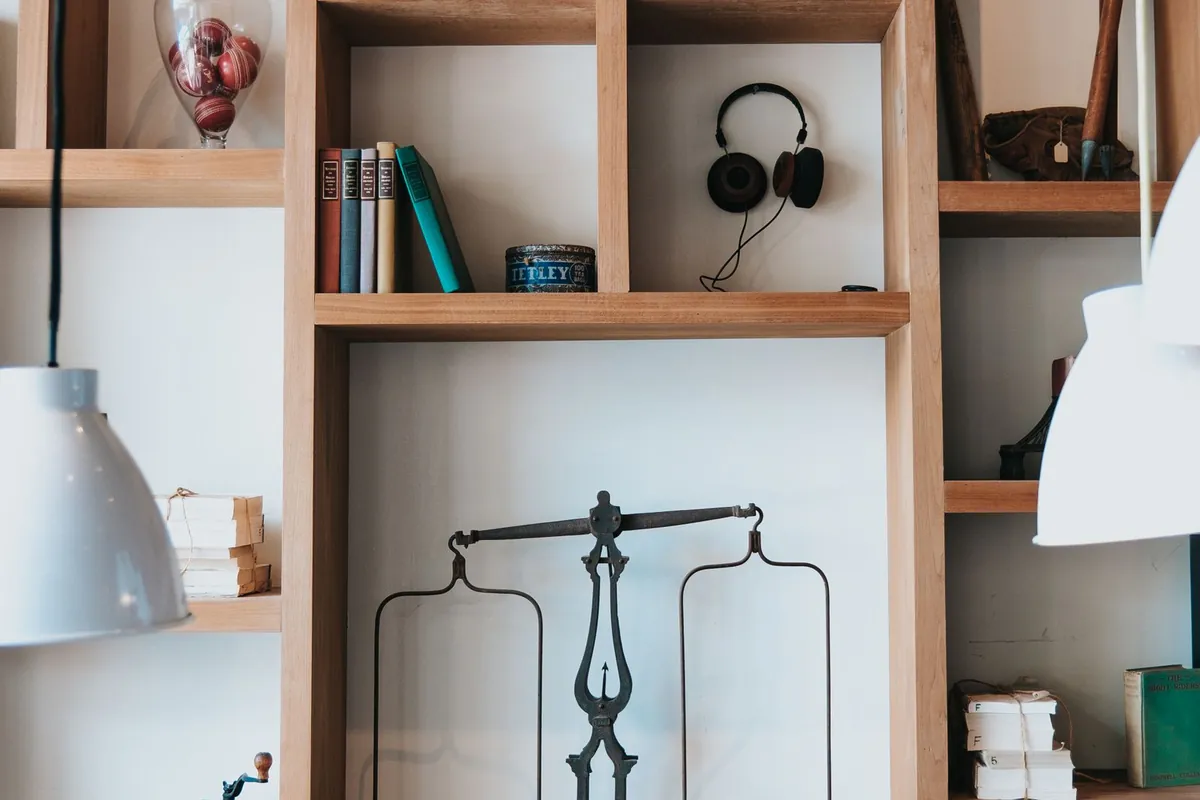
Place the largest items first: tall vases, framed art leaned against the back, large baskets on lower shelves. These anchor the arrangement.
Put heavier-looking items on lower shelves. This keeps the bookcase visually balanced.
Step 4: Add books in two ways
Books are the backbone of most shelf styling. Mix them two ways:
- Vertical: standing upright in a row, with a bookend or object at the end.
- Horizontal: stacked flat in a small pile of three to five books. A small object can sit on top.
Alternate vertical and horizontal across the shelves. This creates rhythm and avoids long, flat rows.
Some people sort books by color for a decorative look, or turn spines inward for a neutral look. Both are styling choices; organizing by color makes finding a specific book harder, so do what suits how you read.
Step 5: Use the triangle method
Pick one type of item, like plants or white ceramics. Place three of them so they form a loose triangle across the bookcase: one high on the left, one in the middle on the right, one low on the left.
Repeat with another category. Triangles spread color and shapes evenly so no area feels heavy.
Step 6: Layer front to back
Lean a frame or small artwork at the back of a shelf. Put a smaller object in front of it. Layering adds depth and makes shelves look intentional.
Step 7: Leave breathing room
Leave some empty space on every shelf. Aim for roughly a third of each shelf clear. Empty space makes the objects you do display stand out.
Step back across the room and squint. Any spot that looks crowded or empty? Adjust until the weight feels even.
Pick a simple color story
Shelves look calmer when objects share a few colors. Choose two or three, like white, natural wood and green, and let most items fit that palette. Then add one accent color in small doses, repeated three times across the bookcase. Colorful book spines count as color too, so if your books are bright, keep the objects neutral.
Add baskets for real storage
Lidded baskets and boxes on the bottom shelves hide practical items like cables, toys, games or paperwork. Choose two or three in the same material to keep it tidy. Natural woven baskets add texture, which suits a boho bedroom or living room.
Bring in plants
Trailing plants like pothos look great on high shelves. Small potted plants add life to lower ones. If shelves are far from windows, choose from these low-light indoor plants. Battery puck lights or a small lamp can also light up a dark corner.
Floating shelves
Floating shelves have less space, so keep them simple:
- One or two stacks of books
- One plant
- One small framed print
- One object
In kitchens, mix useful items like jars, cookbooks and nice dishes with one or two decorative pieces. These kitchen counter decor ideas follow similar rules.
Style it to match your room
- Minimal: fewer items, a tight color palette, lots of empty space.
- Boho: baskets, ceramics, plants, woven textures.
- Farmhouse: wood, stoneware, greenery, vintage books.
- Modern: sculptural objects, black and white, marble and metal.
Shelves beside a gallery wall
If your bookcase sits next to a busy gallery wall, keep the shelves calmer. Use more books and fewer objects so the room doesn't feel chaotic.
Common shelf styling mistakes
- Every shelf filled edge to edge
- All items the same height
- Too many tiny objects
- Everything pushed to the front
- No consistent colors or materials
Frequently asked questions
How many items should be on each shelf?
Usually two to four groups per shelf, depending on width. Leave about a third of each shelf empty.
Should books face spine out?
Most people keep spines out for easy browsing. Turning spines inward creates a neutral look but makes finding books harder.
How do I style shelves on a budget?
Shop your home first. Use books, plants and objects from other rooms. Thrift stores are great for vases, bowls and frames.
What do I put on high shelves?
Lightweight items, trailing plants, or decorative pieces you don't need to reach often.
Read next: How to Style a Coffee Table (Easy Formulas That Always Work) →