How to Choose a Rug Size for Every Room (Simple Rules)
Affiliate disclosure: This article contains affiliate links. If you buy through them, we may earn a small commission at no extra cost to you. As an Amazon Associate I earn from qualifying purchases. Links go to Amazon search results for the product types we mention, not to specific products we have tested.
A rug can make a room feel finished, or it can make it look awkward and smaller. The difference is usually size. The most common mistake is choosing a rug that's too small.
Here's how to choose a rug size for each room with simple rules, plus how to measure before you buy.
The general rule
When in doubt, go bigger. A larger rug connects the furniture and makes the space feel open. A small rug floating in the middle of a room looks like a bath mat.
In most rooms, leave about 12 to 18 inches of bare floor between the rug and the walls. In very small rooms, 8 to 10 inches is fine.
Common rug sizes
- 2x3 and 3x5: entryways, in front of a kitchen sink, beside a bed
- 4x6: small entryways, under a small round table, a reading nook
- 5x8: small living rooms, under a queen bed (lower two-thirds), home office
- 8x10: most average living rooms, under a queen or king bed, most dining tables
- 9x12: large living rooms and open-plan areas
- Runners (2.5x8, 2.5x10): hallways and galley kitchens
Sizes are given in feet. UK and European rugs are often sold in centimetres, like 160x230 cm (roughly 5x8) and 200x290 cm (roughly 6.5x9.5).
Living room rug size
There are three common layouts:
1. All legs on. All furniture legs sit on the rug. This looks the most luxurious but needs a big rug, usually 9x12 or larger. Best for large rooms.
2. Front legs on. The front legs of the sofa and chairs sit on the rug; the back legs are on the floor. This is the most popular option. It ties the seating together and works with an 8x10 in most rooms, or a 5x8 in a small room.
3. Coffee table only. Only the coffee table sits on the rug. This usually looks too small. Avoid it unless the room is tiny and the furniture is very light.
A good starting point: the rug should be at least 6 inches wider than your sofa on each side. A full guide to small living rooms is in these small living room decor ideas on a budget.
Bedroom rug size
The goal is soft floor when you step out of bed.
- Queen bed: an 8x10 placed horizontally, starting a little below the nightstands, so it extends about 18 to 24 inches on each side and past the foot of the bed.
- King bed: a 9x12 placed the same way.
- Twin or full bed: a 5x8 placed horizontally.
On a budget, two runners on either side of the bed also work. Rugs are a big part of making a room feel warm, as covered in these cozy bedroom ideas.
Dining room rug size
Chairs need to stay on the rug when pulled out. Otherwise they catch on the edge every time someone sits down.
The rule: measure your table, then add 24 to 30 inches on every side.
- A table for 4 to 6 usually needs an 8x10.
- A table for 8 usually needs a 9x12.
- Round tables look best on round rugs, with the same 24-inch clearance.
Choose a low pile, easy-to-clean rug for dining spaces. Flatweave and washable rugs handle spills best. More tips are in this guide to small dining room ideas.
Entryway and hallway rugs
Leave a few inches of floor showing on each side so the rug doesn't look squeezed. In a hallway, the runner should leave 4 to 6 inches of floor on each side and stop short of doorways. Make sure doors open freely over the rug before you buy.
How to measure before you buy
- Measure the room and note doors, vents and floor outlets.
- Mark the rug outline on the floor with painter's tape.
- Leave the tape down for a day or two and walk around it.
- Check that doors clear the rug and that the outline catches the right furniture legs.
This simple test prevents most rug regrets.
Layering rugs
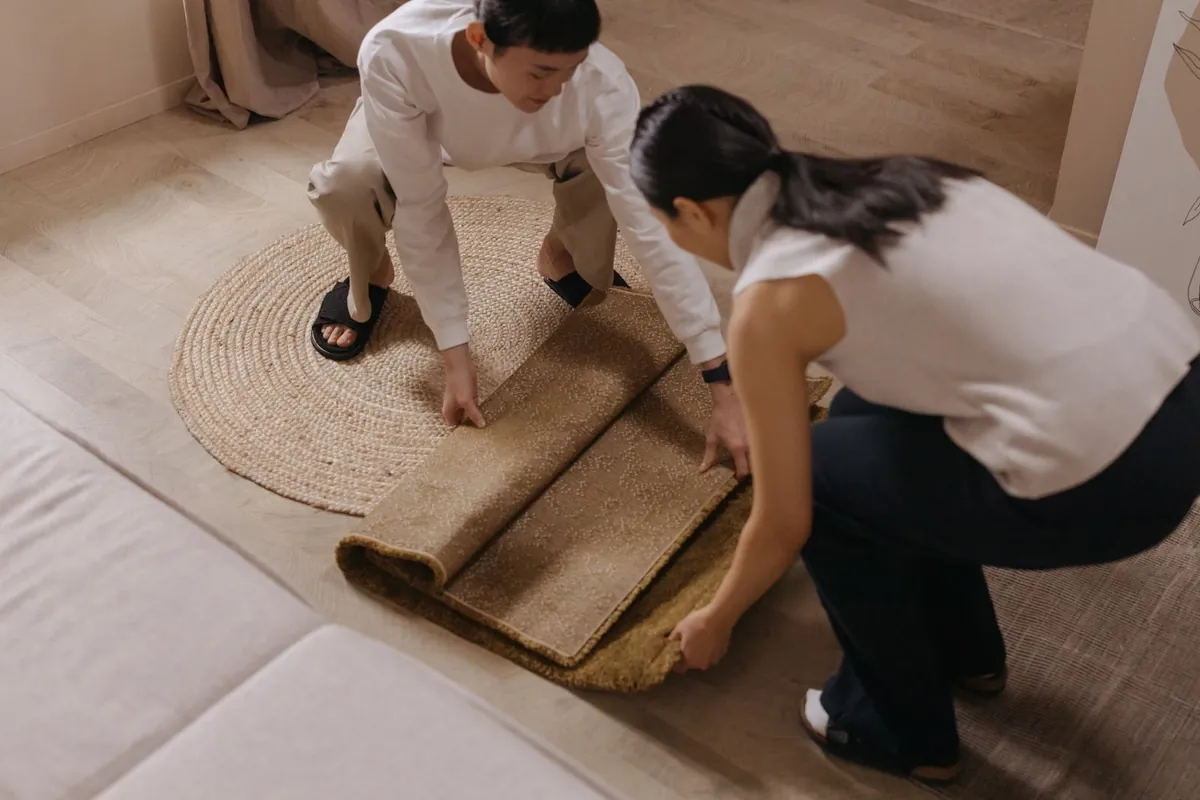
If the rug you love is too small, layer it on top of a larger, cheaper rug. A big jute or flatweave base with a smaller patterned rug on top adds texture and fixes the size problem. It's a useful trick when mixing patterns too. This guide on how to mix patterns in a room explains how to keep it balanced.
Choosing materials
- Wool: durable, soft, naturally stain-resistant. Higher upfront cost but lasts.
- Polypropylene and polyester: affordable and easy to clean. Good for kids and pets.
- Jute and sisal: natural texture, great for layering, but rough underfoot and harder to clean.
- Cotton flatweave: light and often washable. Best for low-traffic areas.
Always add a rug pad. It prevents slipping, protects floors and makes thin rugs feel softer.
Frequently asked questions
Is it better for a rug to be too big or too small?
Too big is almost always better than too small. Just leave a strip of floor showing around the edges so it doesn't look like wall-to-wall carpet.
What size rug goes under a queen bed?
An 8x10 is the most common choice. Place it horizontally with the top edge just below the nightstands.
Should a rug go under the sofa?
Ideally the front legs should sit on it. That connects the seating area. All legs on works too if your rug is large enough.
Can I put a rug on carpet?
Yes. Choose a flat, low pile rug and use a rug pad designed for carpet to stop it from shifting.
Read next: How to Mix Patterns in a Room (Without It Looking Chaotic) →