Small Entryway Ideas: Storage and Style for Tiny Spaces
Affiliate disclosure: This article contains affiliate links. If you buy through them, we may earn a small commission at no extra cost to you. As an Amazon Associate I earn from qualifying purchases. Links go to Amazon search results for the product types we mention, not to specific products we have tested.
The entryway is the first thing you see when you get home. It's also where shoes, bags, keys and mail pile up fast. In apartments and small homes, the "entryway" might be a strip of wall next to the front door.
Even a tiny space can be organized and welcoming. Here are practical small entryway ideas that work with what you have.
Decide what your entry needs to do
Start by listing what lands near your door every day. For most people:
- Shoes
- Coats and jackets
- Bags and backpacks
- Keys and wallets
- Umbrellas, dog leashes, reusable shopping bags
Plan storage for the things you use daily. Seasonal items can live in a closet.
Storage for tiny entryways
Wall hooks
Hooks are the most space-efficient coat storage. Mount a row at around 60 to 66 inches high for adults, and a lower row for kids. Allow one or two hooks per person plus one for guests.
Renters can use heavy-duty adhesive hooks for light jackets, but coats and bags need screws.
A slim shoe cabinet
Tipping shoe cabinets are only about 7 to 10 inches deep. They hold a surprising number of shoes and double as a narrow console for keys. Anchor them to the wall, since tall narrow furniture can tip.
A storage bench
If you have 3 to 4 feet of wall, a bench gives you a place to sit while putting on shoes. Choose one with cubbies or baskets underneath.
Floating shelf
A shelf above the hooks holds baskets for hats, gloves and scarves.
A wall pocket or mail sorter
A small mail organizer stops paper from piling up on every surface. Deal with mail weekly so it doesn't become clutter.
Use the back of the door
An over-the-door organizer adds storage without using any floor or wall space. Clear-pocket versions hold shoes, gloves, sunglasses and dog supplies. Hooks that hang over the door work for bags and coats in apartments where you can't drill.
Make it feel bigger
Add a mirror
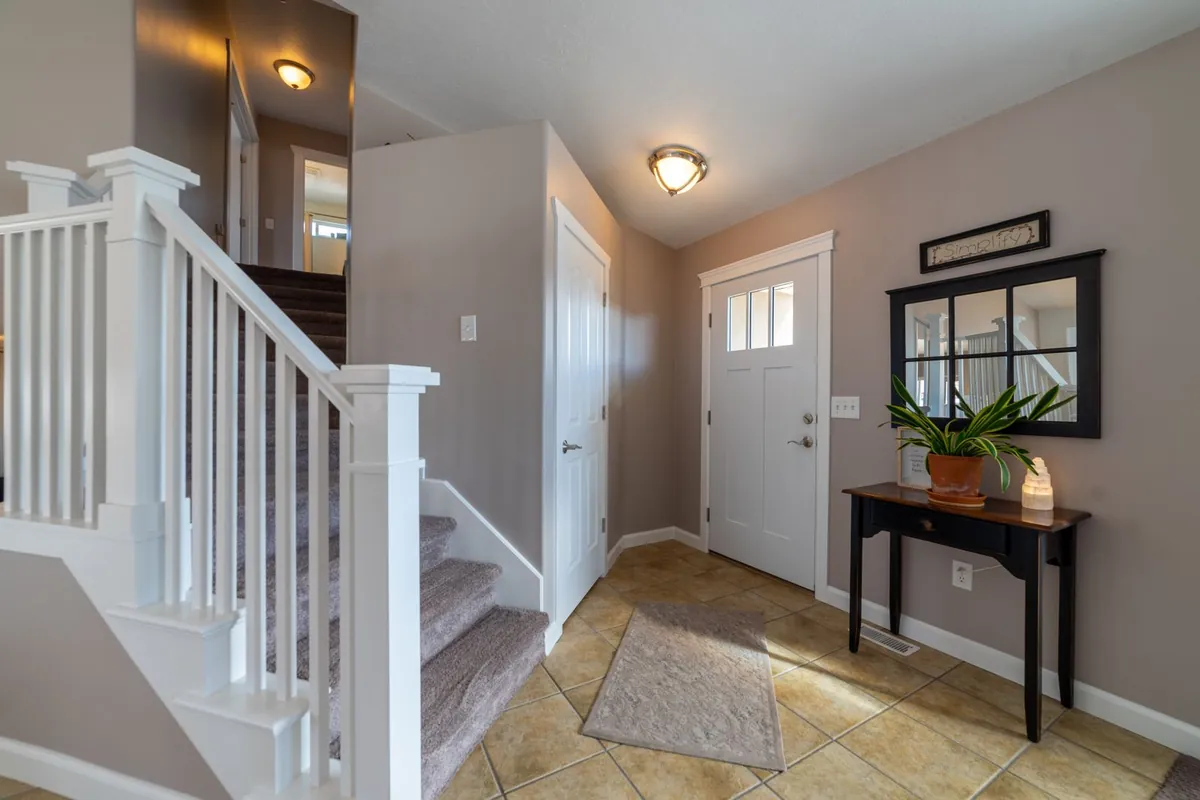
A mirror reflects light and makes a narrow entry feel wider. It's also handy for a last look before you leave. A round mirror above a slim console is a classic combination.
Light it well
Entries often have one weak ceiling light. Add a small table lamp on a console, or a plug-in sconce near the door. Warm white bulbs make coming home feel welcoming. For more on mixing light sources, see this guide to layered lighting.
Keep the floor visible
Choose furniture on legs and a rug that leaves a few inches of floor showing on each side. Visible floor makes any space feel larger.
Choose the right rug
Entry rugs take a beating. Look for:
- Low pile or flatweave
- Washable or easy to clean
- A non-slip pad underneath
- A size that lets the door open freely
In a narrow hall, a runner works better than a small square mat. Check exact sizes in this rug size guide.
No entryway at all?
When your front door opens straight into the living room, create a "visual" entry:
- Place a narrow console or bench against the nearest wall.
- Put a rug in front of the door to define the zone.
- Use a bookcase or open shelving unit to create a partial divider.
- Hang hooks and a mirror on the wall beside the door.
This makes the space feel intentional and stops clutter from spreading into the living area. The same zone-making ideas appear in these small living room decor ideas.
Style it simply
A small entry needs only a few decor pieces:
- A small tray or bowl for keys
- A plant or a vase of greenery
- One piece of art or a mirror
- A basket for shoes or scarves
Keep surfaces mostly clear so they stay useful. If you have shelves nearby, these tips on how to style shelves help balance decor with storage.
Daily habits that keep it tidy
- Limit shoes by the door to one or two pairs per person.
- Hang bags as soon as you come in.
- Empty pockets into the key tray.
- Sort mail standing at the recycling bin.
- Do a 2-minute reset once a week.
Common mistakes
- Furniture that blocks the door swing
- Too many hooks crammed together
- A doormat that's too small or slides
- No lighting near the door
- Using the entry as overflow storage
Frequently asked questions
What should be in a small entryway?
At minimum: hooks for coats and bags, somewhere for shoes, and a spot for keys. Add a mirror and a light if you have space.
How deep should an entryway console be?
In tight spaces, 8 to 12 inches deep is ideal. Anything deeper can block walkways.
How do I hide shoes in a small entry?
Use a slim tipping shoe cabinet, lidded baskets under a bench, or a closed storage bench.
What color should a small entryway be?
Light colors make it feel larger. A darker color can also work well on a single wall in a small entry, especially with good lighting and a mirror.